Description
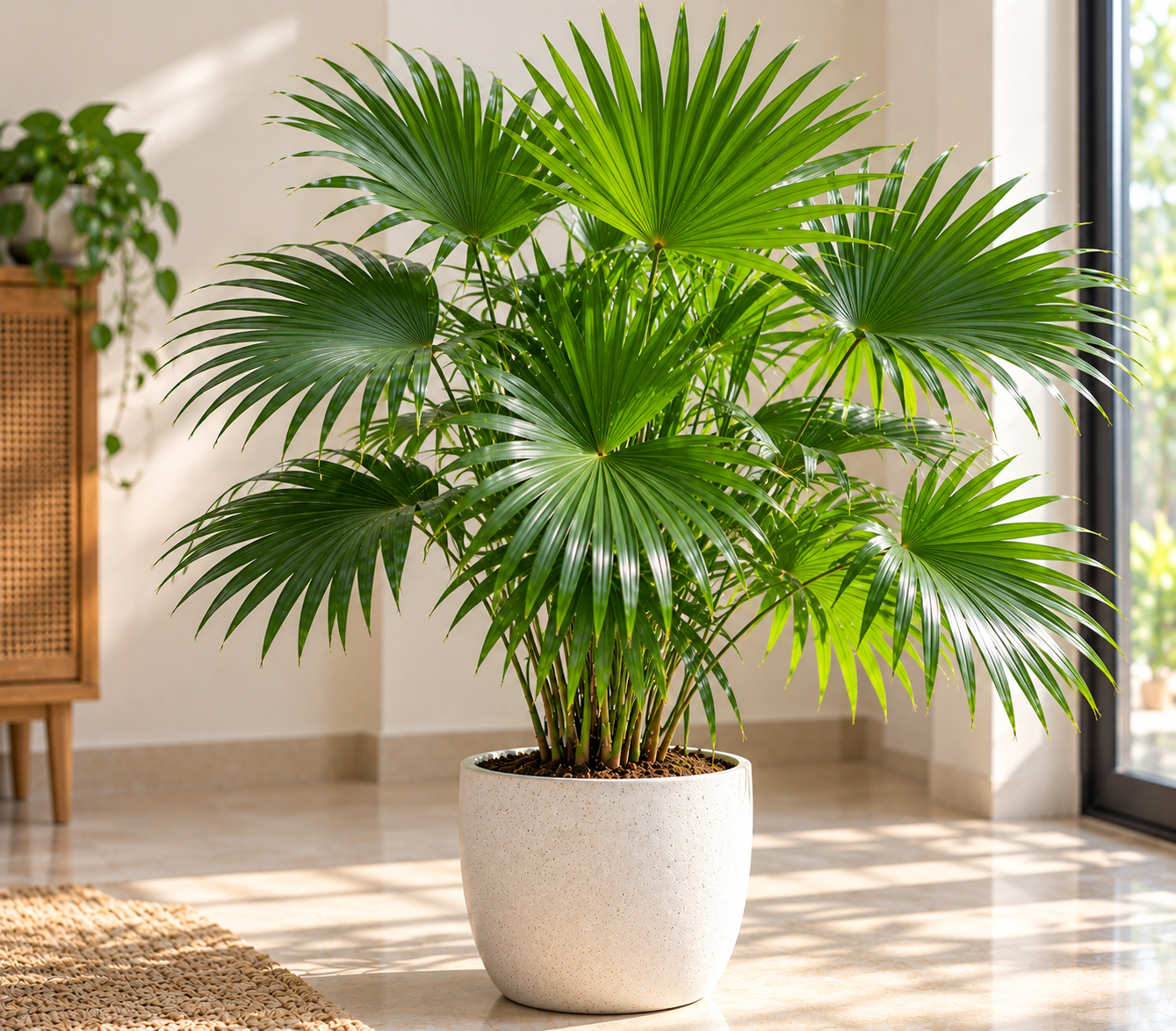
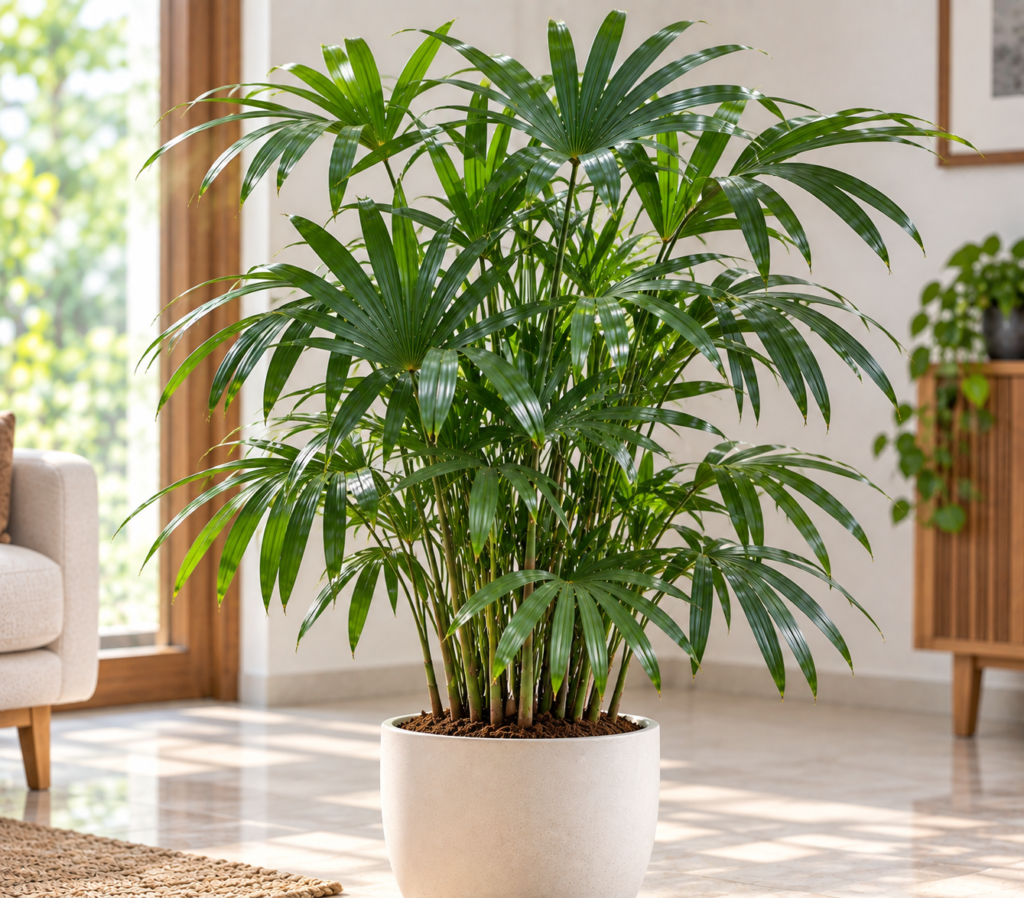
Livistona chinensis, the Chinese fan palm or fountain palm, is a species of subtropical palm tree of east Asia. It is native to southern Japan, Taiwan, the Ryukyu Islands, southeastern China and Hainan.
Sunlight Requirement – Chinese fan Palms prefer bright, filtered sunlight. Keep it away from direct sunlight.
Watering Requirement – Water only when top 1–3-inch soil feels dry.
Humidity and Temperature – Chinese fan Palms thrive in warm temperatures between 18°C and 24°C (65°F–75°F) and appreciate moderate to high humidity.
Soil and Potting Mix – Use a well-draining potting mix that retains some moisture but does not become waterlogged. Adding perlite or coarse sand improves drainage.
Soil Mix suggestion – Peat moss or coco coir (30 %) , Perlite or Pumice (20 %), Coarse sand (30 %), Compost (20 %).
Feed – Feed with a weak, balanced liquid fertilizer once a month during the spring and summer months.
Do’s
- Provide bright, indirect light: Place your palm near a north or east-facing window where it gets filtered sunlight.
- Let the topsoil dry: Check that the top 1 to 2 inches of soil are dry before watering again.
- Use well-draining soil: Plant in an aerated, peat-based potting mix with perlite or sand.
- Increase humidity: Mist the fronds occasionally or use a humidifier to prevent brown leaf tips.
- Feed lightly: Apply a diluted, balanced liquid fertilizer once a month during spring and summer
- Do prune dead fronds at the base: Cut away completely brown or dying stems cleanly where they meet the main cane.
Don’ts
- Don’t use direct sunlight: Avoid harsh sun rays, which can scorch, yellow, and burn the delicate leaves.
- Don’t cut off the center crown or top growing tip, as this will kill the palm.
- Don’t overwater: Never let the soil become soggy, as excessive moisture causes root rot, yellowing fronds, and black stems.
- Don’t over-fertilize: Skip heavy feeding or stop fertilizing entirely during the slow-growth fall and winter months.
- Don’t ignore pests: Watch out for spider mites and mealybugs, especially in dry indoor air, and treat them promptly with neem oil.
- Don’t repot too often: Leave the plant slightly rootbound; only repot every 3 to 5 years into a container just 1 to 2 inches larger.
Common Issues –
Yellow leaves and root rot – Cause – Overwatering or a pot that is too large retains excessive moisture, suffocating the delicate root system.
Dry leaves tips and edges – Cause – Dry indoor air, underwatering, or over-fertilization.
Pest Infestations – Cause – Dry indoor conditions attract spider mites or sap-sucking insects.
Reviews
There are no reviews yet.