
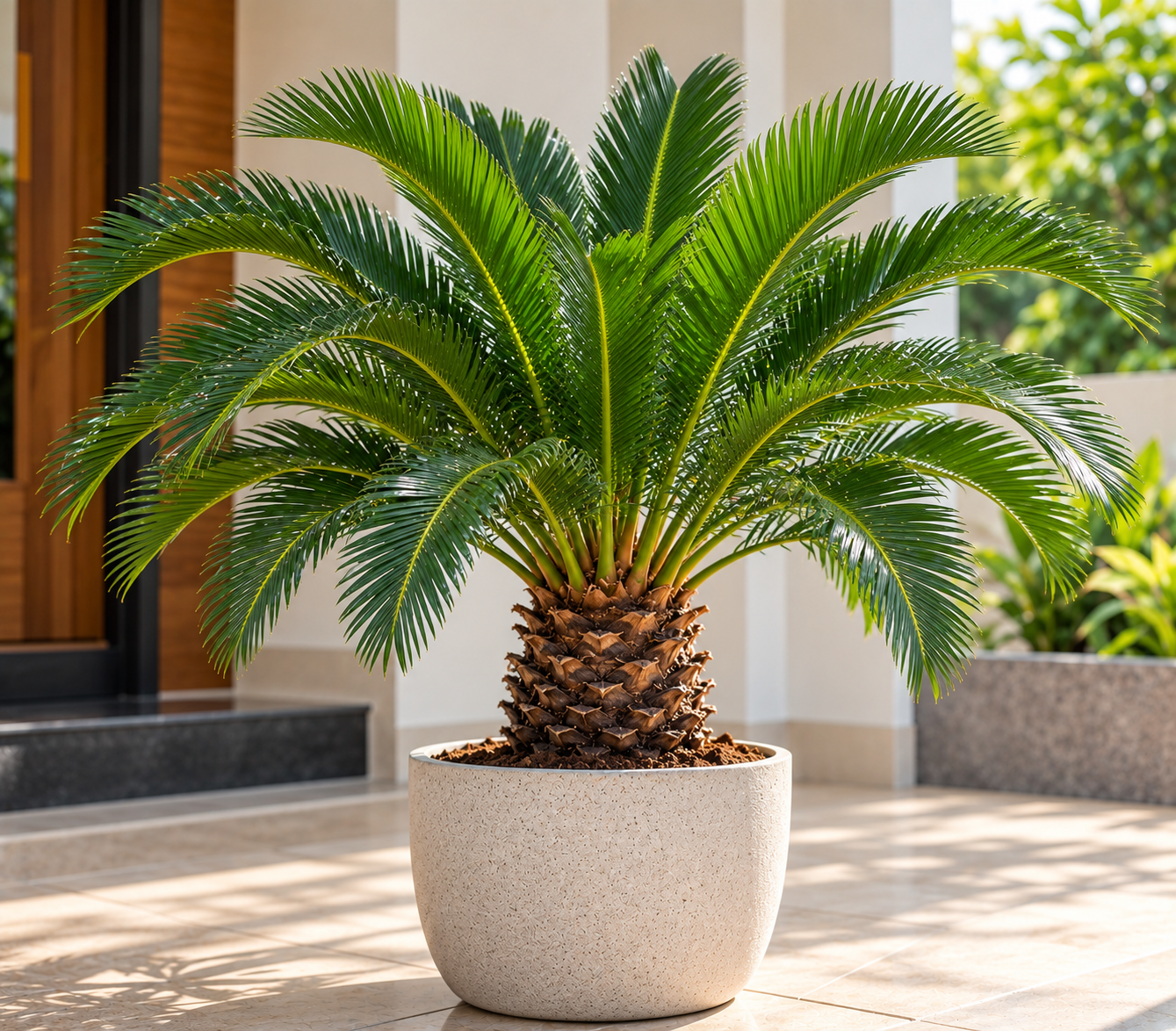
Description
It is native to southern Japan including the Ryukyu Island. The sago cycad can be distinguished by a thick coat of fiber on its trunk. The sago cycad is sometimes mistakenly thought to be a palm, although the only similarity between the two is that they look similar and both produce seeds.
Sunlight Requirement – Cycad Sago Palms prefer bright, filtered sunlight. Although it can tolerate morning sunlight for 2-3 hours, harsh afternoon rays can burn the leaves.
Watering Requirement – Allow the soil to dry out completely before you water again. Sago palms store water and hate soggy soil; overwatering quickly leads to fatal root rot.
Humidity and Temperature – Chinese fan Palms thrive in warm temperatures between 18°C and 24°C (65°F–75°F) and appreciate moderate to high humidity. Average room humidity (30%–50%) works well.
Soil and Potting Mix – Use a fast-draining mix, such as cactus or succulent soil mixed with extra perlite or sand.
Soil Mix suggestion – Peat moss or coco coir (20 %) , Perlite or Pumice (20 %), Coarse sand (50 %), Compost (10 %).
Feed – Feed with a weak, balanced liquid fertilizer once a month during the spring and summer months.
Safety Warning – Sago palms are highly toxic to humans, dogs, cats, and other pets if ingested, especially seeds. Keep them well out of reach.
Do’s
- Provide bright, indirect light: Place your palm near a north or east-facing window where it gets filtered sunlight.
- Let the topsoil dry: Check that the top 2 to 3 inches of soil are dry before watering again.
- Use well-draining soil: Plant in an aerated, peat-based potting mix with perlite or sand.
- Feed lightly: Apply a diluted, balanced liquid fertilizer once a month during spring and summer
- Do prune dead fronds at the base: Cut away completely brown or dying stems cleanly where they meet the main cane.
Don’ts
- Avoid afternoon sunlight: Avoid harsh sun rays, which can scorch, yellow, and burn the delicate leaves.
- Don’t cut off the center crown or top growing tip, as this will kill the palm.
- Don’t overwater: Never let the soil become soggy, as excessive moisture causes root rot, yellowing fronds, and black stems.
- Don’t plant deep: Make sure the crown of the plant is out of the soil to prevent stem decay. The brown, woody bulb (caudex) must remain entirely above the ground.
- Don’t ignore pet and human toxicity: Keep all parts of the sago palm—especially the seeds—out of reach of pets and children, as ingestion is highly toxic.
Common Issues –
Overwatering and root rot – Cause – Sago palms store water in their trunks and prefer dry soil. Too much water suffocates roots and invites fungi like Phytophthora, leading to a soft trunk, wilting, and leaf drop.
Pests Attack – Cycad Scale and Mealybugs – Scale insects look like tiny, raised white or brown bumps on the undersides of leaves. Sooty Mold: A black, powdery fungal coating that grows on the plant.
Reviews
There are no reviews yet.