Description
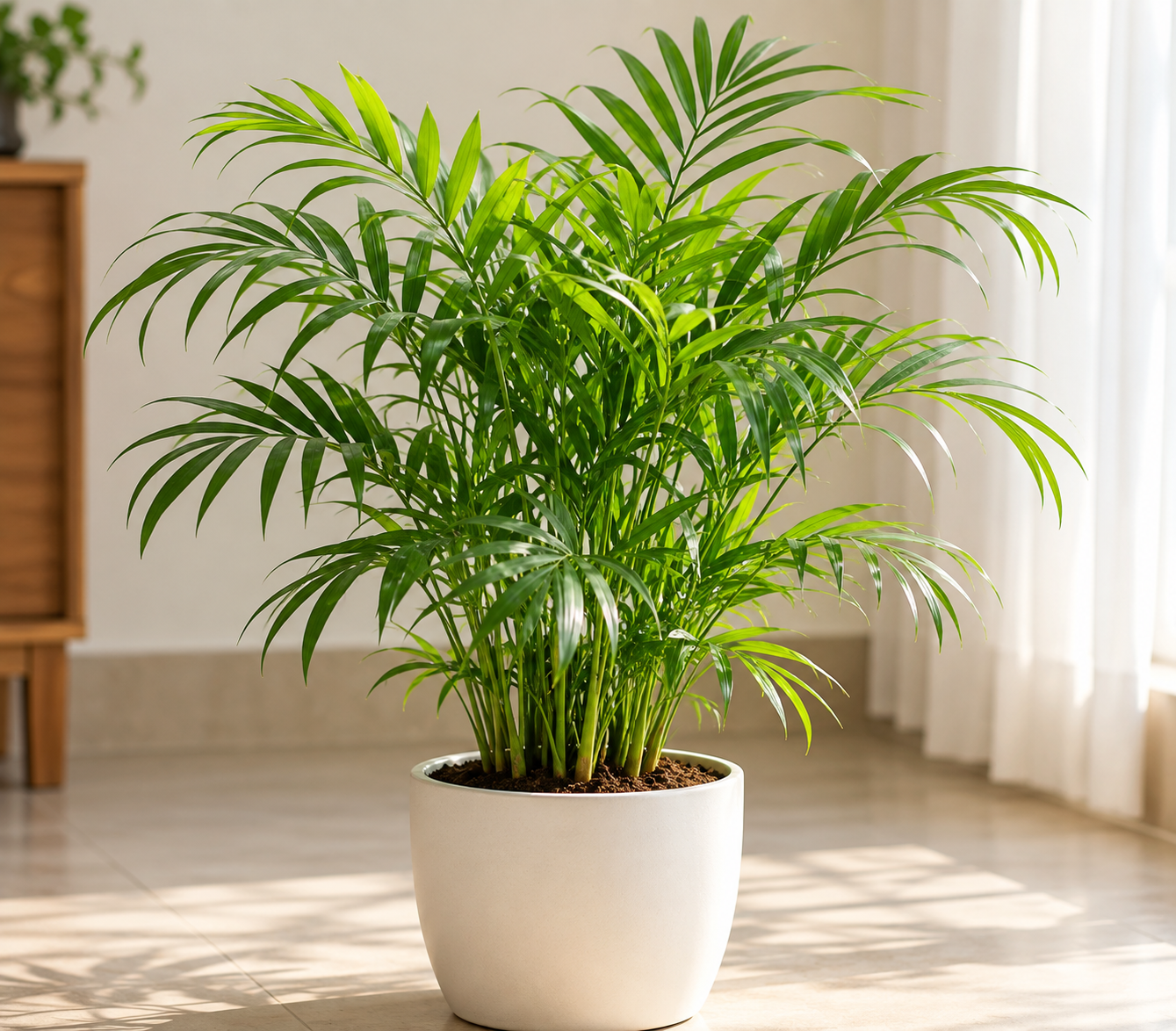
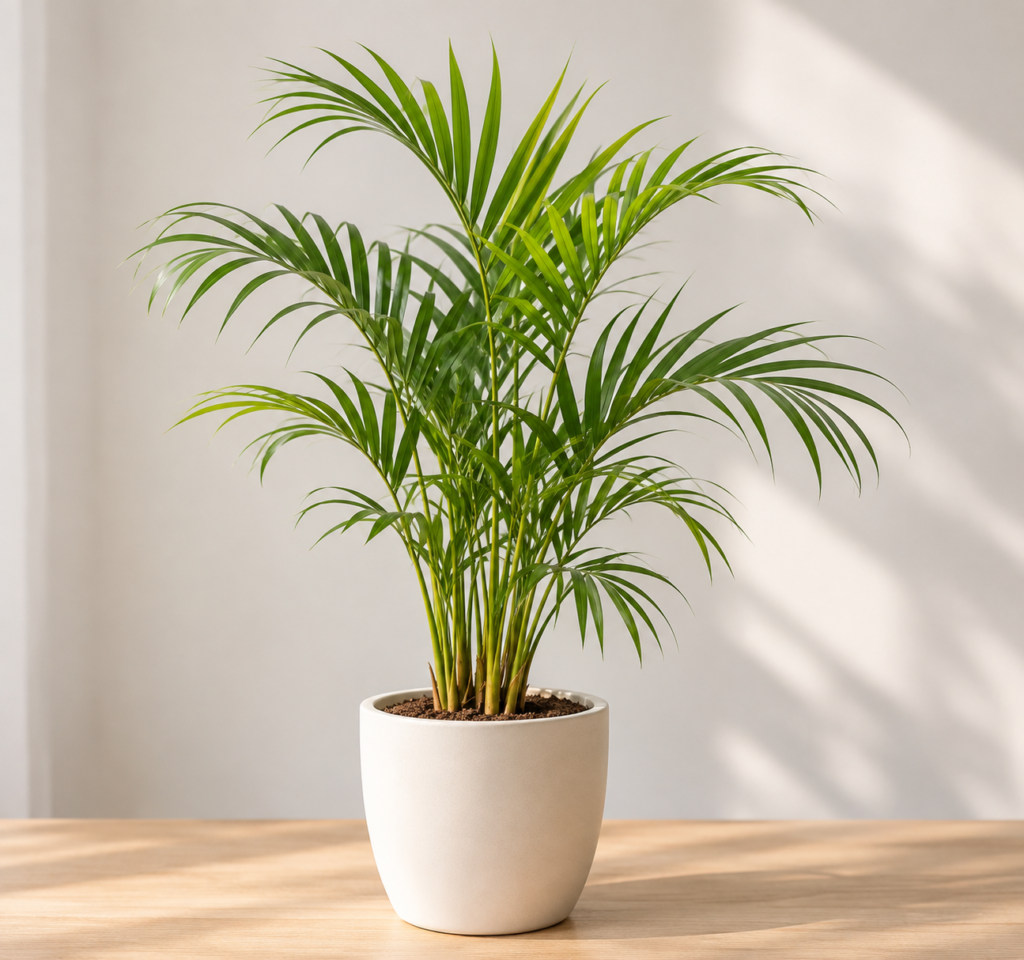
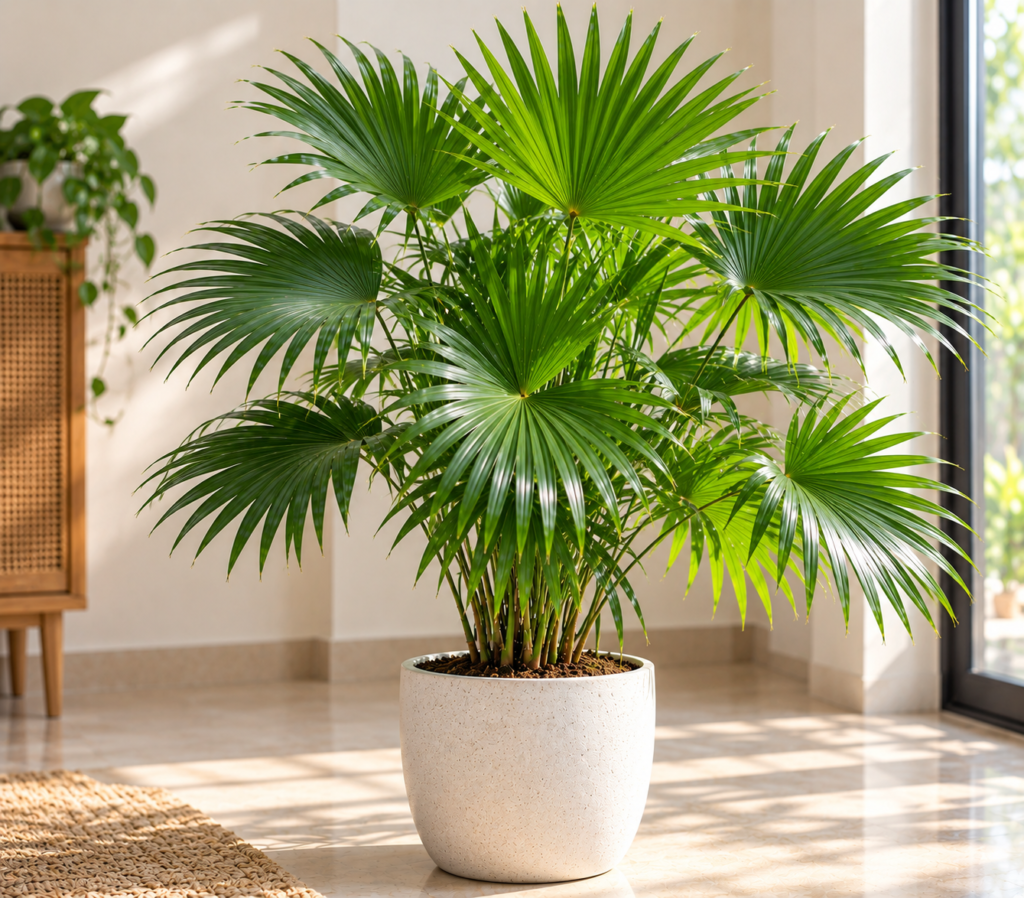
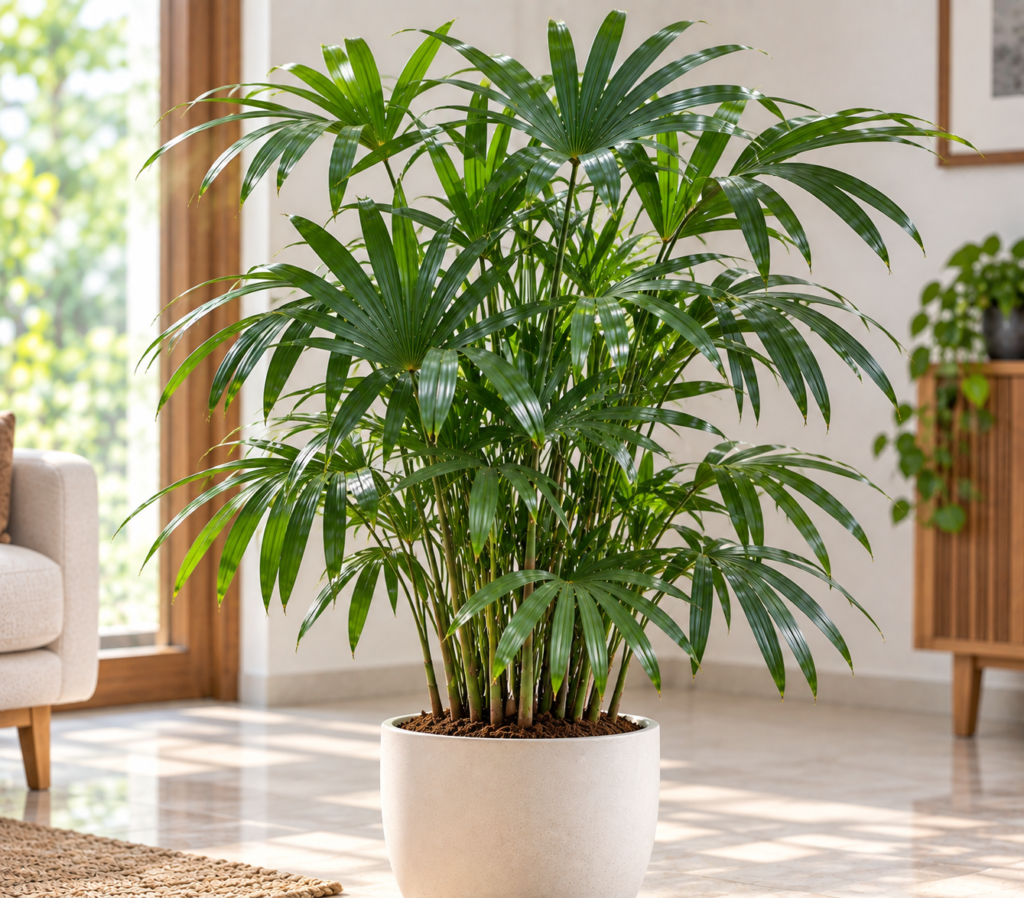
Scientific name – Chamaedorea elegans is a species of small palm tree native to the rainforests in Southern Mexico and Guatemala. The parlor palm is one of the most extensively sold houseplant palms in the world.
Sunlight Requirement – Parlor Palms prefer bright, filtered sunlight. Keep it away from direct sunlight.
Watering Requirement – Water only when top 1–2-inch soil feels dry.
Humidity and Temperature – Parlor Palms thrive in warm temperatures between 18°C and 24°C (65°F–75°F) and appreciate moderate to high humidity.
Soil and Potting Mix – Use a well-draining potting mix that retains some moisture but does not become waterlogged. Adding perlite or coarse sand improves drainage.
Soil Mix suggestion – Peat moss or coco coir (30 %) , Perlite or Pumice (20 %), Coarse sand (30 %), Compost (20 %).
Feed – Feed with a weak, balanced liquid fertilizer once a month during the spring and summer growing season.
Pet Safety: Non-toxic and safe for cats and dogs.
Do’s
- Provide bright, indirect light: Place your palm near a north or east-facing window where it gets filtered sunlight.
- Let the topsoil dry: Check that the top 1 to 2 inches of soil are dry before watering again.
- Use well-draining soil: Plant in an aerated, peat-based potting mix with perlite or sand.
- Increase humidity: Mist the fronds occasionally or use a humidifier to prevent brown leaf tips.
- Feed lightly: Apply a diluted, balanced liquid fertilizer once a month during spring and summer
Don’ts
- Don’t use direct sunlight: Avoid harsh sun rays, which can scorch, yellow, and burn the delicate leaves.
- Don’t overwater: Never let the soil become soggy, as excessive moisture causes root rot, yellowing fronds, and black stems.
- Don’t expose to cold drafts: Keep the plant away from freezing windows, air conditioning vents, and sudden temperature drops.
- Don’t over-fertilize: Skip heavy feeding or stop fertilizing entirely during the slow-growth fall and winter months.
- Don’t ignore pests: Watch out for spider mites and mealybugs, especially in dry indoor air, and treat them promptly with neem oil.
Common Issues –
Yellow leaves and root rot – Cause – Overwatering or a pot that is too large retains excessive moisture, suffocating the delicate root system.
Dry leaves tips and edges – Cause – Dry indoor air, underwatering, or over-fertilization.
Pest Infestations – Cause – Dry indoor conditions attract common sap-sucking insects.
Reviews
There are no reviews yet.